
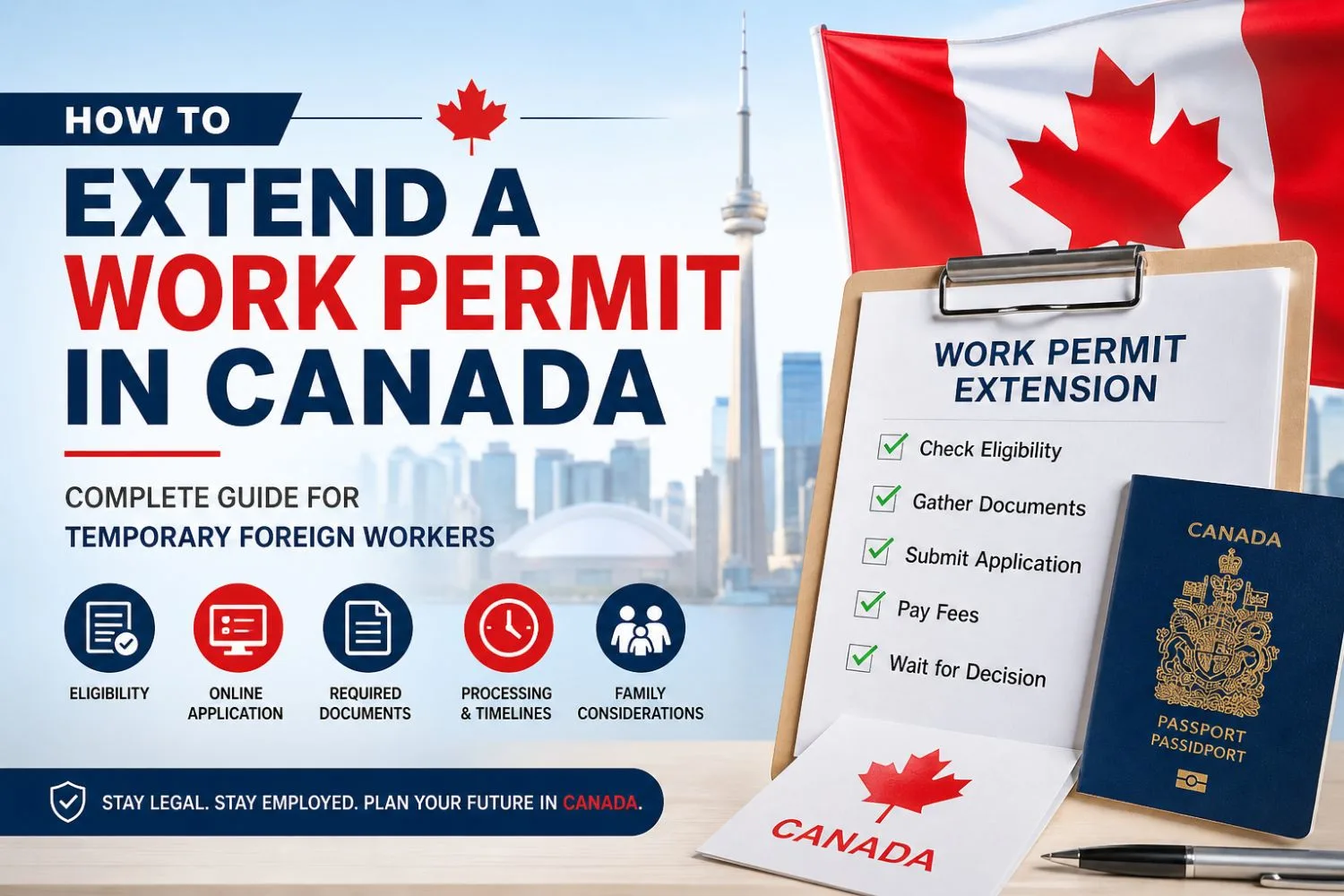
Canada is currently one of the most favored countries that attracts many international workers owing to its economic strength, high living standards, and a favorable immigration policy. Each year, there are several foreign individuals who migrate to Canada and join the workforce in areas like health care, transport, building, technology, tourism, farming, and manufacturing among others. Nevertheless, many of the temporary foreign workers obtain work permits with validity for a specific duration, implying that they have to seek a renewal at some point.
The importance of knowing how to renew a work permit in Canada cannot be overemphasized since any mistake made during the process may result in losing one’s status or getting interrupted at work. In most cases, many people ge worried when the expiry period draws closer due to lack of information on eligibility criteria and documentation.
The positive thing is that there is a systematic process for work permit extensions in Canada. By applying carefully, promptly, and providing correct information, you have nothing to worry about in terms of the extension procedure. Regardless of the type of work permit or whether you are pending approval of PR, understanding the process will enable you to safeguard yourself legally and professionally.
This article provides a comprehensive analysis of all information necessary for temporary foreign workers to extend their permit successfully.
👉 https://land2air.ca/canada-work-permit-extension-a-comprehensive-guide/
Why Many Foreign Workers Extend Their Work Permits in Canada
• Canada continues to attract thousands of foreign workers because of its strong economy, high quality of life, and immigration opportunities.
• Temporary foreign workers are employed in industries such as healthcare, trucking, construction, technology, hospitality, agriculture, and manufacturing.
• Most Canadian work permits are issued for a limited period, meaning workers must eventually apply for an extension to continue working legally.
• Failing to extend a work permit on time can lead to loss of legal status, interruption of employment, and future immigration complications.
• Many workers become stressed as their permit expiry date approaches because they are unsure about eligibility requirements, processing times, and required documents.
• Applying early and preparing proper documentation can make the extension process much smoother.
• Workers who apply before their permit expires may benefit from maintained status, allowing them to continue working legally while waiting for a decision.
• Understanding the extension process is especially important for individuals planning to apply for permanent residency in the future.
This guide explains the key requirements, application process, documents, timelines, and important considerations for temporary foreign workers extending their work permits in Canada.
👉 https://land2air.ca/work-permit/
Understanding Canadian Work Permits
Before applying for a work permit extension, it is necessary to identify the nature of the work permit that one currently holds. Work permits in Canada vary depending on the individual’s circumstances, the employing entity, and their immigration route.
Employer-specific permits entitle foreign workers to be employed by the employer named in the work permit document. This may include information on the employer’s identity, place of work, and occupational designation. Typically, employers have to undergo a Labour Market Impact Assessment prior to employing a foreign employee.
The open permit is different in that it allows the individual to work for multiple employers in Canada rather than be restricted to working for only one employer. The open permit is most frequently granted to spouses of foreign students or workers, Post Graduation Work Permit holders, and some permanent residency applicants.
It is important for you to understand what type of permit you have because extension conditions will depend upon your current authorization.
👉 https://land2air.ca/open-work-permit-in-canada/
👉 https://land2air.ca/how-to-apply-for-canada-work-permit-a-complete-guide/
Why Foreign Workers Need Permit Extensions
• Canada continues to attract thousands of foreign workers because of its strong economy, high quality of life, and immigration opportunities.
• Temporary foreign workers are employed in industries such as healthcare, trucking, construction, technology, hospitality, agriculture, and manufacturing.
• Most Canadian work permits are issued for a limited period, meaning workers must eventually apply for an extension to continue working legally.
• Failing to extend a work permit on time can lead to loss of legal status, interruption of employment, and future immigration complications.
• Many workers become stressed as their permit expiry date approaches because they are unsure about eligibility requirements, processing times, and required documents.
• Applying early and preparing proper documentation can make the extension process much smoother.
• Workers who apply before their permit expires may benefit from maintained status, allowing them to continue working legally while waiting for a decision.
• Understanding the extension process is especially important for individuals planning to apply for permanent residency in the future.
This guide explains the key requirements, application process, documents, timelines, and important considerations for temporary foreign workers extending their work permits in Canada.
Best Time to Apply for an Extension
One of the greatest mistakes that most immigrants commit when seeking an extension for their work permit is applying for it in the eleventh hour. Immigration officials advise applicants to apply for an extension of their visa one to three months prior to its expiry to allow ample time for any unforeseen changes in processing periods.
Immigration experts advise applying for your work permit extension at least one to three months before its expiration.
An application submitted prior to the expiry of the permit would guarantee maintained status. This means that workers are allowed to work without any legal hindrances until their application is processed for the extension of the visa. Workers find it reassuring to be on maintained status because they will earn money without any interruptions.
It is therefore advisable not to apply after the expiry of the permit.
Eligibility Requirements for Extension Applications
However, not all foreigners are automatically eligible to renew their status. Foreigners need to remain eligible for the immigration category they currently have.
Generally, workers must:
• Hold valid temporary resident status in Canada
• Continue meeting the conditions of their current work permit
• Demonstrate ongoing employment or eligibility
• Have a valid passport covering the requested extension period
• Comply with Canadian immigration laws and permit conditions
Immigration officers may also review the applicant’s previous immigration history, employment records, and compliance with permit conditions before making a decision.
If a passport is close to expiring, applicants should renew it before submitting a work permit extension request because permits are usually not issued beyond the passport expiry date.
Documents Required for the Application
Preparing complete and accurate documentation is one of the most important parts of the extension process. Missing or incorrect documents may delay processing or result in refusal.
Commonly required documents include:
• Copy of the current work permit
• Valid passport
• Recent digital photo
• Proof of current immigration status
• Employment-related documents
• Marriage certificate or relationship proof (if applicable)
• Permanent residence documents (if applicable)
Workers with employer-specific permits may also need:
• A new Labour Market Impact Assessment (LMIA), if required
• Updated job offer letter
• Employment contract
• Employer compliance information
Some applicants may also require medical examinations, especially individuals working in healthcare, childcare, agriculture, or other occupations involving public health.
Applicants should carefully review IRCC document requirements before submitting their applications.
👉 https://www.canada.ca/en/immigration-refugees-citizenship/services/work-canada/permit/extend.html
Online Process to Extend a Work Permit in Canada
Almost all foreign workers apply online due to its efficiency and convenience compared to applying using paper forms.
The first stage requires either registering or signing into an online account for immigrations. Using this website, the applicants can fill out necessary forms, attach required documents, pay any applicable fees, and receive notifications about the progress of their application.
After signing in, the applicant needs to answer eligibility questions. It is critical to give precise answers since they determine the proper application form.
After filling out the forms, the applicants submit the relevant documentation electronically. The clarity and labeling of the files make it easier for the immigration officials to process the application.
The next step involves paying the necessary processing fees online. After submitting the application, it is crucial to keep track of the receipts and application numbers.
Maintained Status and Why It Matters
Maintained status is the most significant protection accorded to temporary foreign workers in Canada. The temporary foreign worker will be granted maintained status provided that the extension is applied prior to expiry of the permit, which means they will still work with similar terms and conditions pending the decision.
For example, if the temporary foreign worker is working based on an employer-specific permit, then he/she is entitled to maintain his/her position during the processing period of the extension request.
But then again, such maintained status normally is valid only when the person is still within the jurisdiction of Canada. Leaving the country could mean that one will not be able to work immediately upon reentry.
The knowledge of maintained status will definitely help in eliminating unnecessary anxiety among workers.
Extending Employer-Specific Work Authorization
Foreign workers who have obtained employer-specific authorization usually require further employer assistance when applying for an extension.
In most cases, the employer will have to provide a new Labour Market Impact Assessment or a fresh offer through the employer compliance system. There may be a need for a revised employment contract, updated salary, and a new job description.
Immigration officials determine whether the employment is genuine and whether the employer still complies with labor standards in Canada. Employer-based applications may lead to difficulties on behalf of both the employer and the international employee if there is non-compliance with immigration laws.
This being a multi-party process, it is advisable that the worker talk to the employer well in advance.
Open Work Permit Extension Process
Individuals holding open work permits usually have more flexibility because they are not restricted to a single employer. However, eligibility for extension depends on the immigration category under which the permit was issued.
For example:
• Spouses of eligible international students or skilled workers may qualify for extensions if the principal applicant still meets immigration requirements.
• Certain permanent residence applicants may qualify for a Bridging Open Work Permit.
• Post-Graduation Work Permits (PGWPs) are generally issued only once and usually cannot be extended.
An exception may apply if the PGWP validity was shortened because of passport expiry. In such cases, applicants may request the remaining eligible duration after renewing their passport.
Understanding the specific rules for your permit category is essential before applying for an extension.
What Happens if the Permit Expires
Having their authorization expire before applying will certainly result in several issues. Those workers who lose their status would no longer be eligible to work in Canada legally.
Thankfully, certain people could have their status restored within 90 days from their expiry date. While within the stipulated time, applicants are allowed to file an application for the same.
Nevertheless, employees in the process of restoration are not permitted to continue working until their applications have been approved. This may cause them economic problems and job disruptions.
It is always advisable to apply prior to expiry since it ensures legality and work authorization.
Common Reasons Applications Get Refused
Most refusals by way of extension result from inadequate or incorrect submission of data.
Missing documents, unsigned application forms, passports that have expired, and inaccurate job-related data may cause some problems to immigration officials. Others do not provide adequate evidence that they still qualify.
Employment problems could be another reason for application rejection. Misleading details on an LMIA or job offer, or violations by an employer, may cause denial.
Previous violation of permit terms or unauthorized employment may lead to further complications during consideration.
Careful preparation and attention to detail can significantly reduce the risk of refusal.
Extending Status for Family Members
If an employee requests an extension, then the whole family should also consider renewing their documents.
Spouses could be granted open work permits provided that the main employee is still qualified according to immigration laws. If the dependents are students, then they would require extending their study permits or visitor records.
Families need to be aware that filing an application does not necessarily mean that everyone will gain citizenship. It is important for each person within the family to file separately.
This will help ensure that all the family members remain lawful.
Importance of Honesty in Immigration Applications
It is crucial to ensure that the information provided is true and accurate.
Misrepresentations in Canadian immigration issues may result in denials, exclusion from Canada, and future immigration complications.
Immigrants must be honest and provide accurate information even when they fear that some information may affect their immigration application. In most cases, submitting an explanation letter would be more favorable than submitting false information.
Being honest and transparent helps establish credibility.
Long-Term Immigration Opportunities
Many temporary workers seek permanent residency in Canada at some point. Having a good work history and a legitimate record of immigration is advantageous for future chances.
Some programs like Express Entry, Provincial Nomination Programs, and the Canadian Experience Class program favor candidates with Canadian work experience. Compliance with the conditions of your permits will be helpful in applying for permanent residency.
Another benefit of temporary work for Canadian workers is the development of professional contacts, language proficiency, and useful experience that can enhance their immigration status.
Extending temporary authorization is a vital process for many people on the path to obtaining immigration status.
Conclusion
It is essential for foreign temporary workers in Canada to extend their work authorization in order to continue their professional development and personal lives in Canada. While the process might look rather complex at first, there are several strategies which will help to simplify the whole procedure.
Firstly, foreign workers need to file an application before their authorization expires. It is important to prepare all documents required, ensure that the passport is valid, and follow all immigration guidelines. Also, knowledge about maintained status, employer obligations, restoration possibilities, and travel problems is vital.
If you are in any field like transportation, healthcare, construction, hospitality, or any skilled trade, having legal immigration status is crucial not only for your job security but also for further immigration to Canada. Proper planning and action will help you move forward in Canada with confidence and legally.