
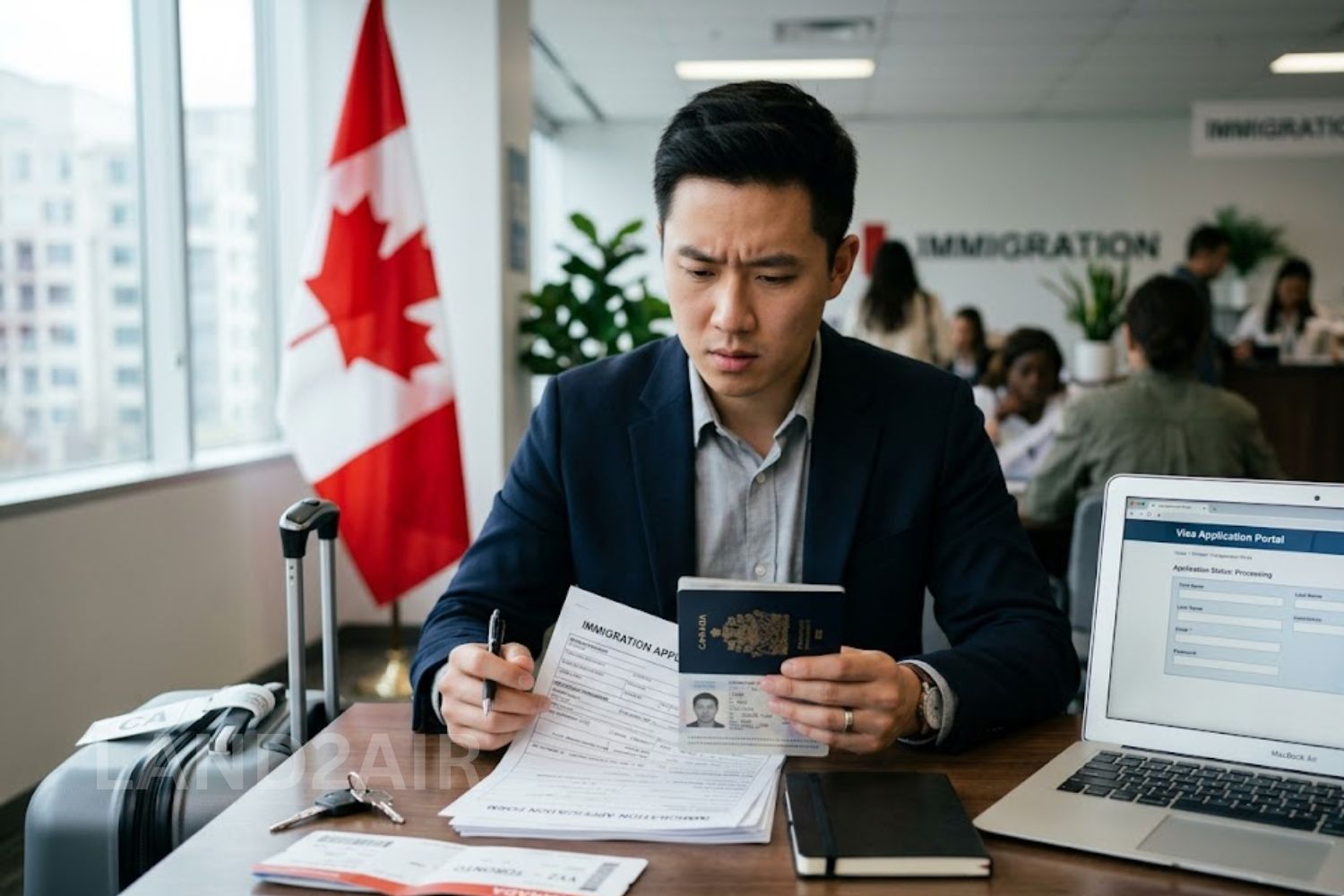
The Canada visa application process is a major step toward achieving your goals—whether for tourism, study, work, or permanent residency. While Canada maintains a transparent immigration system, many applications are refused due to weak documentation or poorly presented profiles.
This guide explains the most common reasons for refusal and provides proven strategies to improve your chances of approval. Many applicants succeed after refusal simply by correcting their mistakes and strengthening their application.
Knowing the way that visa officers reason is usually the greatest benefit you could get.
👉 https://land2air.ca/top-10-canada-visitor-visa-refusal-reasons-land2air-immigration/
What is Canada Visa Refusal?
Canada visa refusal occurs when an immigration officer feels that the applicant failed to satisfy the requirements of the eligibility or failed to present sufficient evidence to prove the point.
This is not necessarily because you are not ineligible. In most cases, it only implies that you failed to show clearly that you were eligible to be employed.
Majority of refusals occur in the following categories:
The weak ties or the absence of ties with the home country can usually result in the refusal of visitor visa applications. Unclear career plans can lead to denying the study permits. Work permits occasionally are denied because of the lapses in documentation.
The knowledge of the category assists in finding solutions.
👉 https://land2air.ca/canada-visitor-visa-refusal-reasons/
Top Reasons Behind Visa Refusal
Financial Weakness in Application
- Sudden large deposits
- Unexplained transactions
- Lack of income proof
- Missing tax documents
Weak Home Country Connections
- No stable job
- No property or assets
- Limited family ties
- No business commitments
Unclear Travel Intent
An imprecise or unclear purpose of traveling can undermine your application. The officers have to know the reason why you intend to visit Canada and what you are going to do.
An elaborate travel explanation, invitations letters and a proper itinerary assists in creating a true intent. Whenever intent is evident, approval opportunities will be enhanced automatically.
Clarity removes doubt.
Documentation Quality Issues
Missing or inaccurate documentation is a significant reason of refusal. Technical mistakes may also cause rejection to even good candidates.
The immigration officers do not make assumptions regarding missing information. They make decisions by considering what is presented only.
One of the easiest methods of averting rejection is to avoid careless filings of documents.
Travel History Concerns
Travel history may make a difference since it demonstrates your immigration behavior. Credibility of an applicant may improve when such an applicant has already traveled to foreign countries and adhered to visa regulations.
Nevertheless, even applicants with no history of travel can be successful in case other aspects of the application are good. Limited travel exposure can be made up by financial power and job security.
There is no instance where a balanced profile will not matter.
👉 https://land2air.ca/canadas-4-study-permit-refusal-reasons-and-your-option/
Canada Visa Refusal Guide: What To Do After Refusal
Panicking is not the best thing to do after rejection. Most of the applicants ruin their opportunities by reapplying without rectification of mistakes.
It is wiser to have a look at the rejection, see what is worrying the officers and tighten your paperwork and then come back.
Any refusal ought to be used as feedback.
Importance of GCMS Notes After Refusal
Internal immigration officer comments that describe the manner of your application evaluation are referred to as GCMS notes. These notes usually give issues that were not stated well in refusal letters.
Applicants with a lot of experience order GCMS notes and then do so again when reapplying due to the strategic insight. You are able to answer in a straightforward manner when you are in a position to know what it was that the officer enquired.
This is a very effective way of enhancing the probability of approval.
👉 https://www.canada.ca/en/immigration-refugees-citizenship/services/application/check-status.html
Proven Strategies to Get Approved
Correct Your Weak Areas First
Retesting without any improvement is not very effective. Officers make comparisons of past applications and anticipate change.
In case of your refusal with regard to money, enhance financial documentation. In case it finds the purpose of travel, explain better. Every issue should be talked about comprehensively.
The best approval factor is improvement.
Write a Strong Explanation Letter
Sometimes a properly written cover letter is all that matters. It enables you to front-line address the concerns of the officers and clarify on improvement.
An excellent reason letter must state clearly what you had said before and what you have done to change.
This demonstrates seriousness and preparation.
Improve Financial Credibility
The financial enhancement does not imply money injection on a temporary basis. It implies demonstrating a stable level of income.
The applicants are advised to pay attention to the appropriate balances, demonstrate salary stability, and submit tax records. A solid profile creates long term trust.
Uniformity brings plausibility.
Show Employment Stability
A professional career minimizes the risk of immigration. The officers are much more confident when giving applicants with good employment backgrounds.
Your intent to take a break can be seen by job confirmation letters, pay slips and the approval of your leave.
To business owners, registration papers and records of transactions contribute to creating stability.
Prepare a Strong SOP
When you have a Statement of Purpose, this is your time to lay out your story in a logical manner. A good SOP outlines your intentions, past and vision.
The reason why generic SOPs fail is that they are not based on real applicant profiles. A customized SOP linking your past, present and future plans makes a very good impression.
Brevity is not so important as clarity and logic.
Mistakes To Avoid During Reapplication
- Reapplying without changes
- Ignoring refusal reasons
- Submitting same documents
- Using generic SOP templates
- Providing incomplete information
When Should You Apply Again?
Formal waiting time upon rejection is non-existent. You can apply again anytime. Nevertheless, unsuccessful applications will only result in frequent rejection.
The correct moment to reapply is in case your profile will be stronger. This can be in the form of better finances, better documentation or a better explanation.
Timing should be based on preparation.
Does Canada Visa Refusal Affect Future Approval?
One rejection will not hurt your future opportunity. It is the reaction you give once you are refused.
Improved profile applicants tend to succeed in the future. But when there is no improvement after the successive applications, it may push credibility.
In the end, it is always good to tell past refusals and demonstrate what you have changed.
Expert Tips To Increase Visa Success Rate
The habits of successful applicants tend to be similar. They are reminiscent of documentation, they do not make false claims, and they are straight with their intentions.
They also know that there is no chance of being lucky to get the visa but rather being prepared. Risk assessment is applied by the immigration officers to make decisions.
It should always aim at minimizing risk perception.
Final Checklist Before Reapplying
Before reapplying, ensure:
- All refusal reasons are addressed
- Financial documents are consistent
- SOP is updated and personalized
- Explanation letter is included
- Documents are complete and organized
Conclusion
The rejection of a Canada visa can be quite disappointing and usually is a temporary loss and not a denial. A number of successful applications are approved upon them making changes to their documents and plan.
In this Canada Visa Refusal Guide, it has been pointed out that the majority of the refusal is as a result of correctable factors like poor financial evidence, vague travel intentions or document mistakes. When the applicants are keen in tackling these issues, they tend to be successful in subsequent applications.
The wittest thing the next thing to do after rejection is not hurry but plan. Listening to officer concerns, strengthening your profile and making a better case can go a long way in making it.
Those who make preparations are the ones who tend to achieve Visa success as opposed to those who apply haste.
FAQ
Why does Canada visa get refused?
Refusal of Canada visas is normally because of lack of sufficient funds, ties to home country, unclear purpose why one intends to travel or lack of documentation.
Can I reapply after Canada visa refusal?
Yes, it is possible to reapply at any time when you change the reasons for refusal and optimize your profile.
How to avoid Canada visa refusal?
To avoid rejection, you should provide full documentation, good finances, a clear purpose, and that you want to go back.
Is GCMS notes helpful after refusal?
Yes, GCMS notes will assist you in learning more about specific officer issues, as well as enhancing your future application.
How many refusals are acceptable?
No limit, however, repeated refusal without improvement can bring down chances of approval.